Planning to expand your business to Kuwait City or moving for a high-level career in the oil and gas sector? U.S. documents are not recognized in Kuwait until they undergo a multi-step Consular Legalization. Since Kuwait is not a member of the Hague Convention, a standard Apostille will not be accepted.
At US Apostille, we specialize in navigating the strict protocols of the Embassy of the State of Kuwait in Washington, D.C. We ensure your documents—from commercial contracts to academic degrees—are 100% compliant with Kuwaiti law.
The Kuwait Authentication Chain
The Kuwaiti Embassy requires a specific sequence of seals. We handle the entire journey for you:
State Level: Notarization and Secretary of State certification.
Chamber of Commerce: Mandatory for commercial documents through NUSACC.
Federal Level: U.S. Department of State authentication in Washington, D.C.
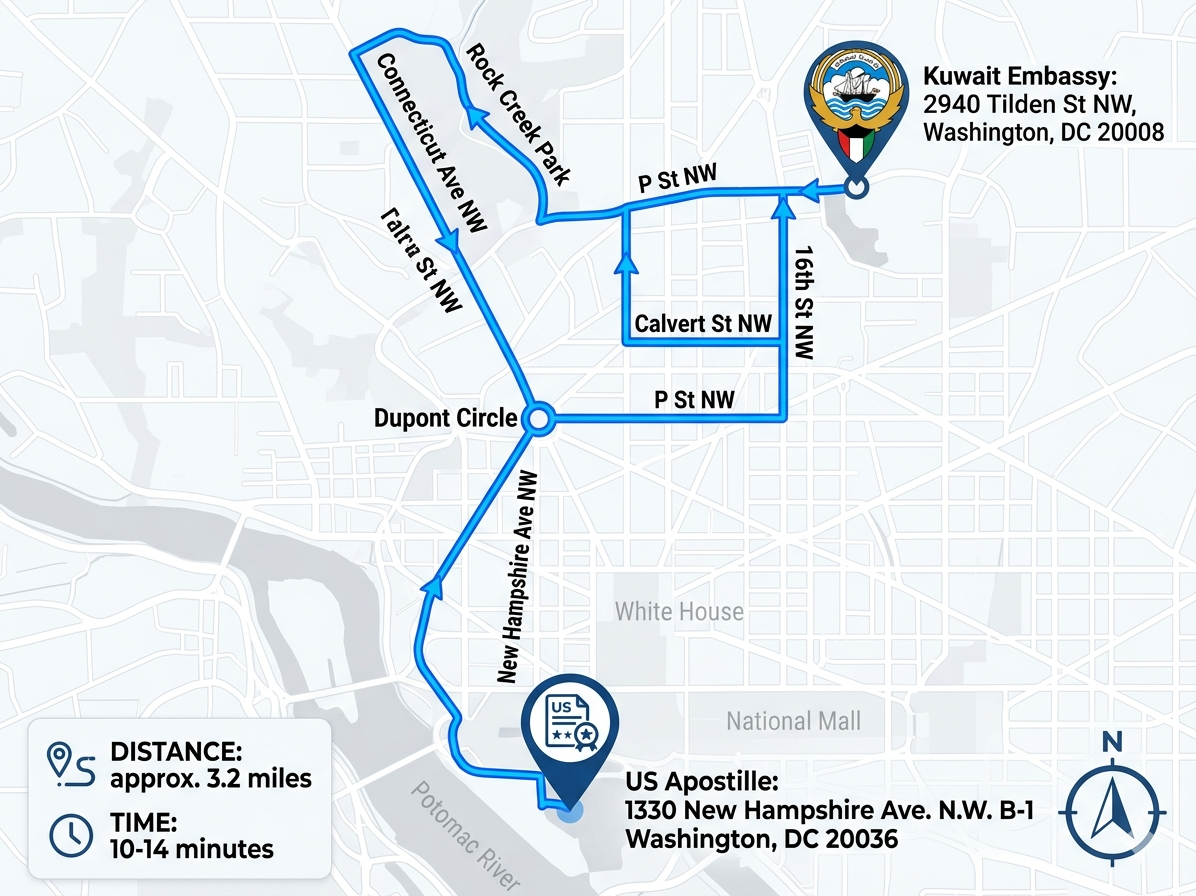
Consular Level: Final legalization at the Embassy of Kuwait.
MOFA Ready: Your document is prepared for final attestation at the Ministry of Foreign Affairs in Kuwait.
Company Documents
Commercial & Corporate Documents
Certificates of Origin & Invoices: Most commercial paperwork for Kuwait requires a stamp from the U.S.-Arab Chamber of Commerce (USACC). We handle this extra step for you seamlessly.
Agency Agreements: For companies appointing a local agent in Kuwait.
Corporate Bylaws & Board Resolutions: For entities registering with the Kuwait Direct Investment Promotion Authority (KDIPA).
Expert Insights for Kuwait Legalization (2026)
The USACC Requirement: Unlike many other countries, Kuwait almost always requires commercial documents to be certified by the National U.S.-Arab Chamber of Commerce. We are registered agents with USACC and can expedite this step.
Fee Precision: Kuwaiti Embassy fees are fixed but must be paid via specific Money Orders. We manage all government payments to avoid the "Return to Sender" errors common with mail-in applications.
Jurisdiction Rules: While we are based in Maryland (D.C. jurisdiction), we handle documents from all 50 states, ensuring they are routed to the correct consular office.